Custom Nanoparticle Solutions
At Target4Care, we specialize in the development and manufacturing of custom nanoparticle and microsphere formulations tailored for cutting-edge research in drug delivery, gene therapy, and diagnostic applications. Our expertise spans a wide range of nanocarriers, offering customized solutions that enhance the efficiency, targeting, and safety of therapeutic molecules.
What are Nanoparticles?
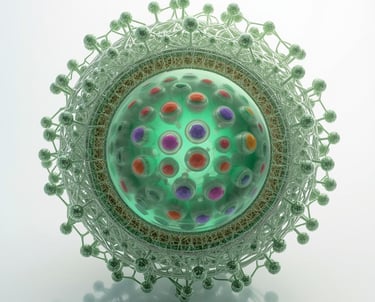
Nanoparticles are tiny particles that range from 1 to 100 nanometers in size and possess unique physical, chemical, and biological properties that differ from their bulk material counterparts. Due to their small size, large surface area, and ability to interact with biological systems at the molecular level, nanoparticles are widely used in biomedical research for applications such as drug delivery, imaging, and diagnostics.
By modifying their size, shape, surface chemistry, and composition, nanoparticles can be engineered to carry therapeutic molecules like drugs, peptides, proteins, RNA, and DNA to specific target sites within the body. This targeted delivery improves the therapeutic effect while minimizing side effects


Key Benefits of Our Nanoparticle and Microsphere Solutions
Improved Bioavailability – Enhance the absorption and efficacy of encapsulated molecules.
Targeted Delivery – Direct active compounds precisely to the intended site, minimizing systemic exposure.
Controlled Release – Achieve sustained or stimuli-responsive release for prolonged therapeutic effects.
Reduced Toxicity – Lower systemic exposure to potent or sensitive compounds.
Versatile Encapsulation – Suitable for a broad range of molecules, including hydrophobic and hydrophilic compounds.
Our Nanoparticle Platforms
We design and manufacture a variety of nanocarrier systems to meet diverse formulation needs:
Liposomes – Phospholipid vesicles suitable for encapsulating both hydrophilic and lipophilic molecules.
Polymeric Nanoparticles – Biodegradable carriers enabling controlled release and enhanced stability.
Solid Nanoparticles – Offer excellent biocompatibility and protection of sensitive compounds.
Microspheres – Ideal for sustained-release injectable or topical formulations.
Nanoemulsions – Stable delivery systems for solubilizing poorly water-soluble actives.


Surface Modulation & Functionalization
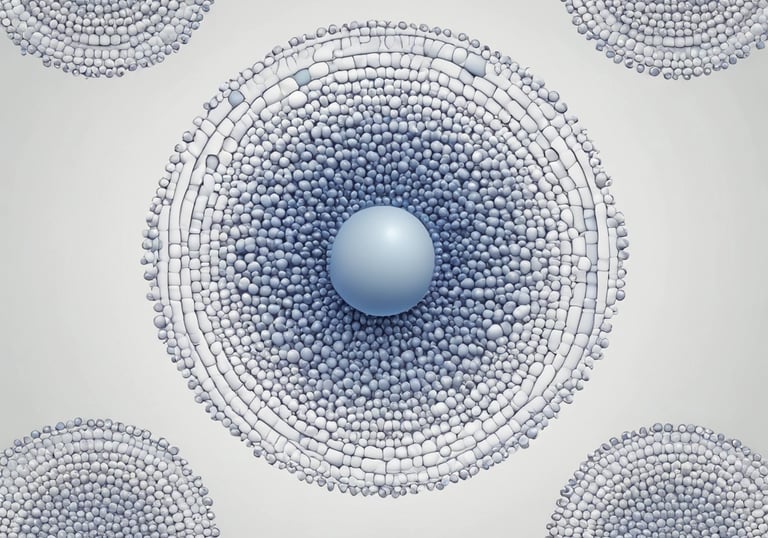
To optimize nanoparticle performance, surface chemistry plays a critical role. We offer customized surface modifications to enhance targeting, reduce immunogenicity, and improve circulation time.
Surface functionalization options include:
Polyethylene Glycol (PEG) Coating – Reduces immune recognition, extends circulation time, and improves biocompatibility.
Ligand Conjugation – Attach targeting molecules such as antibodies, aptamers, or peptides for precision delivery.
Charge Modulation – Tailor surface charge to improve cellular uptake or reduce off-target effects.
Hydrophobic/Hydrophilic Balancing – Adapt nanoparticle surfaces to optimize stability in diverse environments.
These customizable modifications allow us to fine-tune nanoparticle systems for therapeutic, cosmetic, and veterinary applications.
Applications
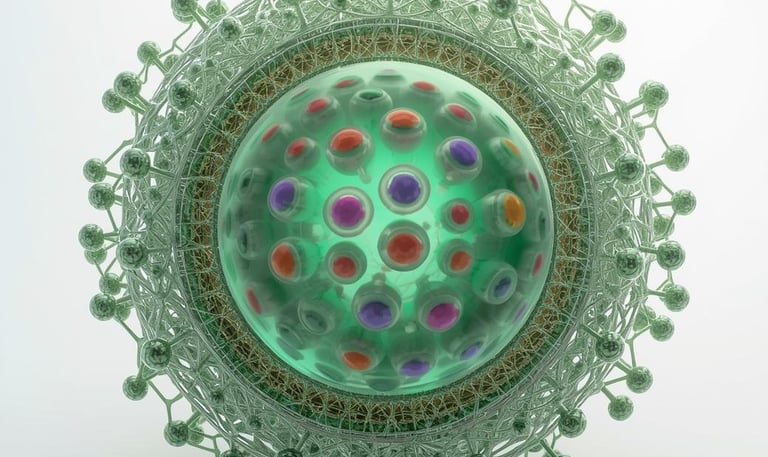
Our nanoparticle and microsphere systems are engineered for a wide range of uses, including:
Pharmaceuticals – Targeted delivery of small molecules, peptides, and biologics.
Gene Therapy – Efficient encapsulation and protection of RNA and DNA.
Cosmetic Formulations – Enhanced stability and penetration of active ingredients.
Veterinary Medicine – Controlled-release and targeted systems for animal health.
Diagnostics – Nanoparticle-based systems for imaging and biosensing.